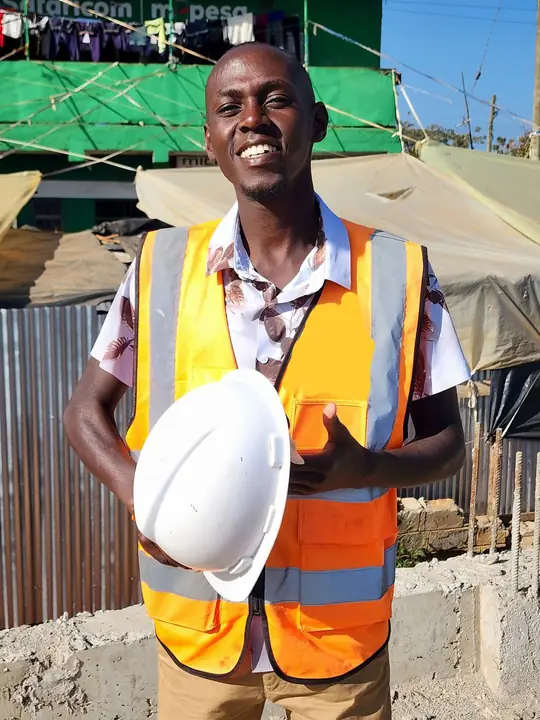
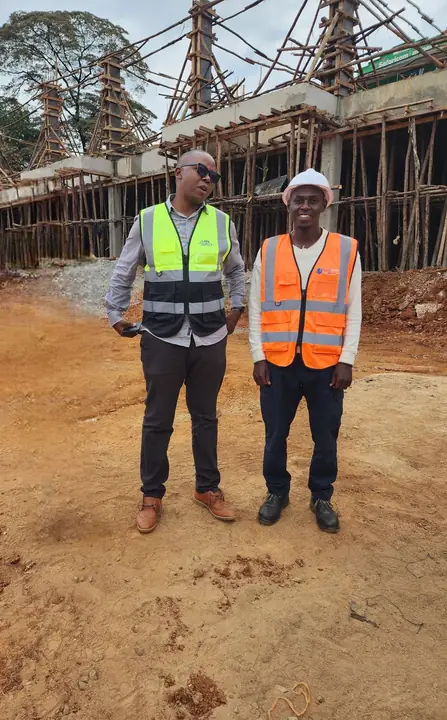
Robinson Wachira at his graduation, Technical University of Kenya
Robinson Wachira

Civil Engineer · Clerk of Works · Developer

Robinson Wachira

I'm a civil engineer working as a Clerk of Works. My job is to make sure what gets built matches the drawings, and that clients pay only for work that's actually been done. That means checking materials on delivery, steel before it's covered, concrete as it's batched and cured, and every BQ claim against the site. I also build software, including a management system for the coffee factory in Gaikundo, where I grew up.

Majority Shareholder Struviatec Infraworks International Ltd

B.TechCivil Engineering, Technical University of Kenya
Clerk of WorksState Department of Housing & Urban Development
StruviatecMajority shareholder, infrastructure works company
4 sites + 1 labResidential, commercial and public works, plus materials testing
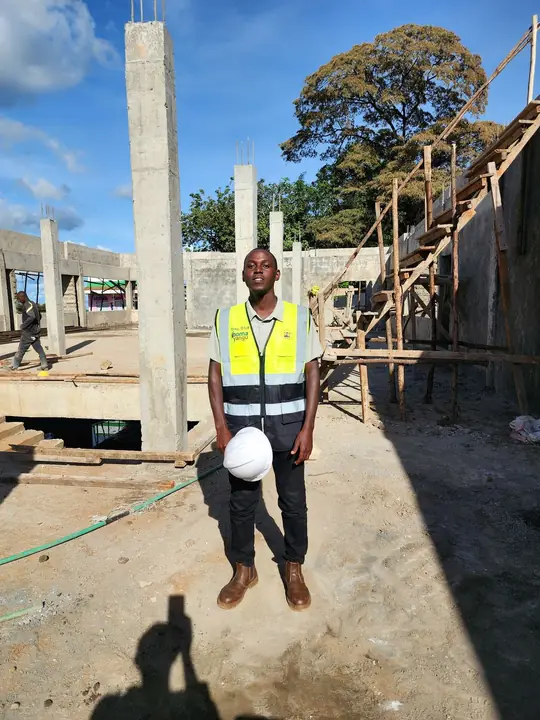
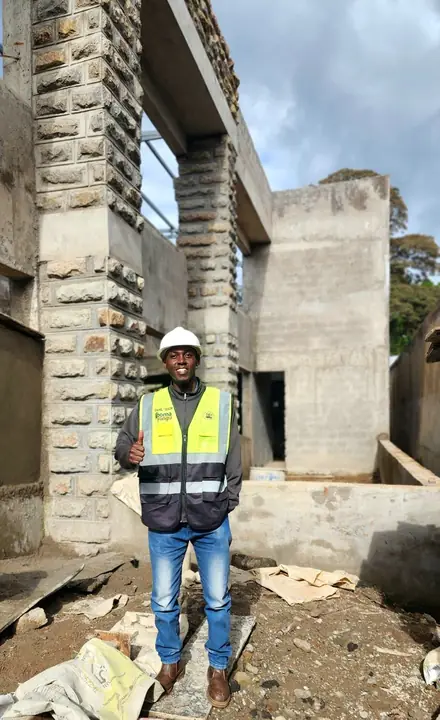
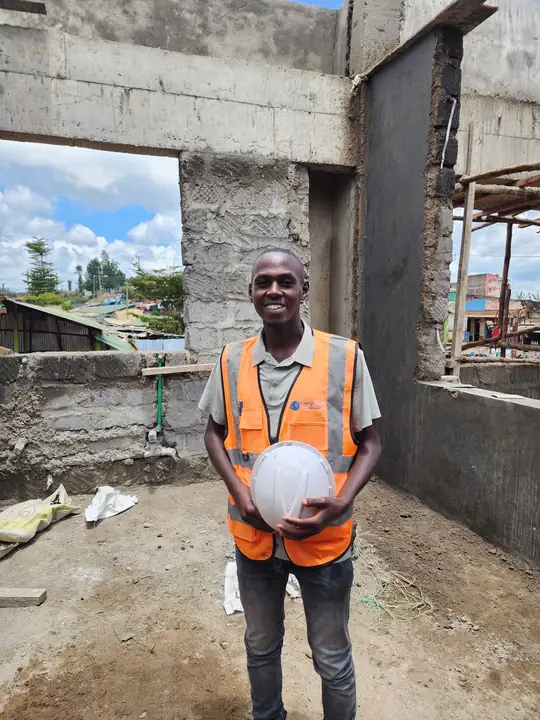
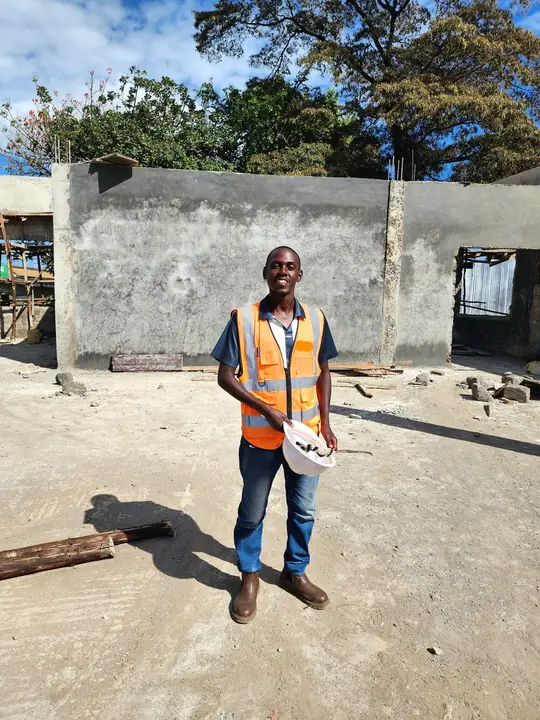
Robinson on a construction site holding a hard hat Robinson at the Africa Urban Forum, KICC Nairobi

About me

Why I check things the way I do

I studied Civil Engineering at the Technical University of Kenya (B.Tech, 2018 to 2023), but most of what shapes my work came later, in the lab and on site.

In 2022 I spent four months at the Materials Testing and Research Division in Nairobi, testing foundation, soil, bitumen and concrete samples and reporting the results against BS and KEBS standards. It taught me that you can't judge sand or concrete by looking at it. You test it.

From 2023 to early 2025 I worked on three Nairobi sites: Shree Cutch Swaminarayan Nagar in Lang'ata with Seyani Brothers, Bloomview Residency in South C with Green Valley Realtors, and Bellevue Lapfund, also in South C, with CRJE East Africa. That's where I learned levelling, setting out and checking reinforcement against bar bending schedules. At CRJE I also used sensors to monitor structural elements during critical stages.

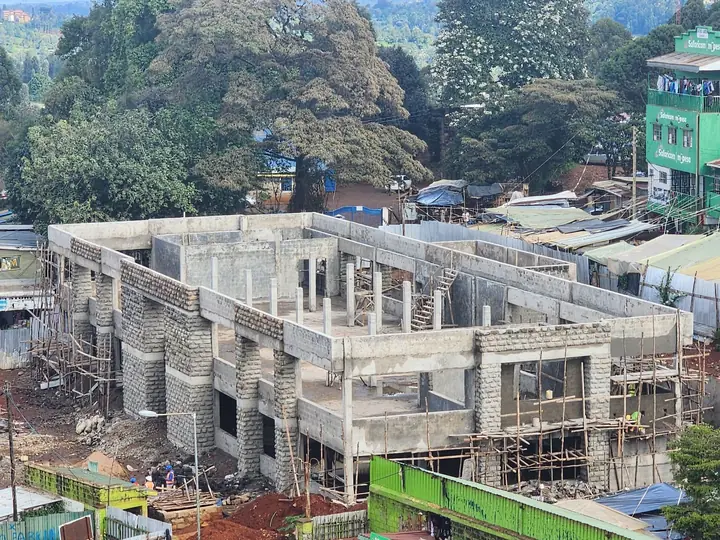
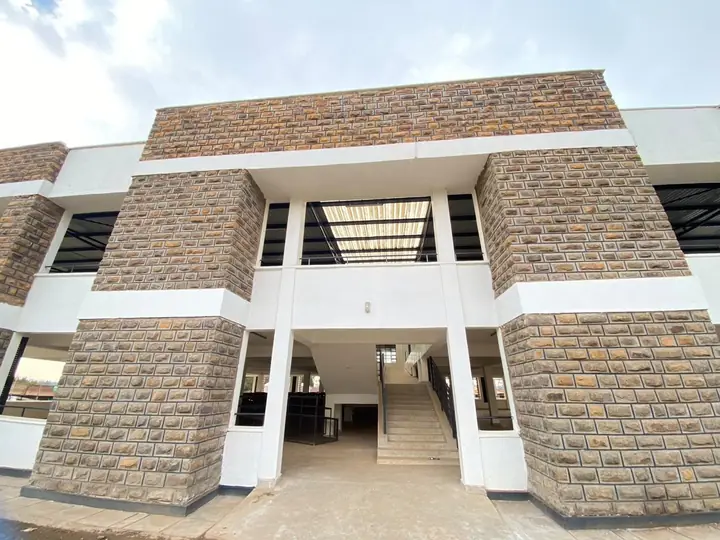
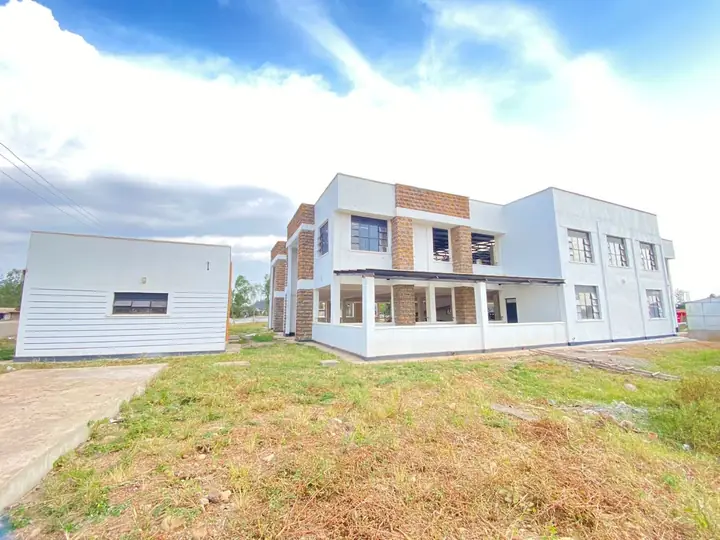
Since February 2025 I've been Clerk of Works for the State Department of Housing and Urban Development at the Gakira Market site in Kangema, Murang'a, reporting to the Project Architect and the Project Manager's Representative. Most days are inspections, measurements, and keeping the site diary and photo record current.

I'm the majority shareholder of Struviatec Infraworks International Ltd, a private limited company in infrastructure works. My Trust owns Mtaalamu Holdings.

As a developer I'm self-taught. Mtaalamu began as my own idea. The New Gaikundo coffee factory, near the primary school I attended, spends much of its time recording deliveries and working out what each farmer is owed. I built a system to handle that and offered it to the factory. Their website followed.

I speak English, Swahili and Kikuyu, which helps when I'm explaining a problem to a site crew.

How I work on site

The steel, the mix and the curing

Most corner-cutting on a site is small. Cement is delivered but not all of it is used, steel leaves the site, extra water goes into the mix, or a slab isn't kept wet. None of it shows on the day, which is exactly why it happens. Checking these things has saved my clients a significant amount, both in cement and in steel bars that would otherwise have been redirected.

Sometimes it means stopping work. I've held up pours when the sand on site was excessively silty, and when the mix design wasn't being followed strictly. Nobody likes a delayed pour, but it costs far less than breaking out and recasting a weak element.

01 · The count

Materials in, materials used

Cement comes in 50 kg bags, so I count them at delivery and keep a running stock. The mix design tells me roughly how many bags a cubic metre of concrete should take, so after a pour I can work out how many should be gone. I verify ballast and sand by the tonne against the delivery note. I tally steel by diameter against the bar bending schedule, so I know if bars leave the site.

02 · The steel

Before it's covered

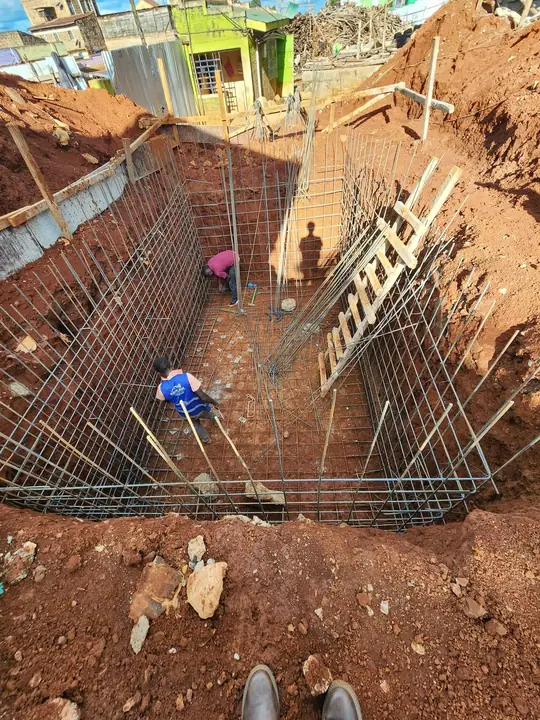
Before a pour, I go through the reinforcement with the bar bending schedule: bar sizes, spacing and lap lengths, and proper cover blocks under the bars, not pieces of broken brick. Once the concrete is in, there's no way to check any of it.

03 · The mix

Sand and water

Two things cause most of the problems I see. One is silty sand, which I check with a simple settling test in a jar before it's used. The other is water added on site to make the mix easier to work. I check that batching follows the mix design, run slump tests, and make sure cube samples are taken so the strength can be confirmed later.

04 · The curing

The days after the pour

Concrete needs to be kept wet, usually for at least seven days, or it loses strength and cracks. I check that slabs are actually being watered or covered, and that formwork and props aren't removed earlier than they should be.

05 · The bill

Checking the BQ against the site

Before a payment is certified, I measure what has actually been done and compare it with what's being claimed against the BQ. If the claim is for 120 m² of plaster and only 80 m² is done, the certificate should say 80. Partly finished items take the most time, because they have to be measured, not estimated.

06 · Your eyes on site

Keeping you informed

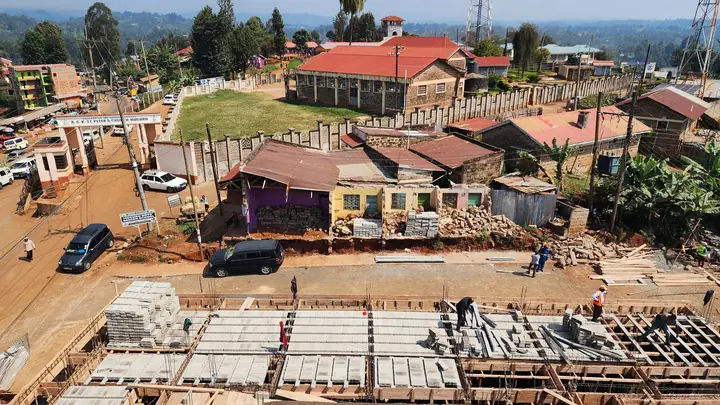
If you can't visit often, you shouldn't have to take someone's word that things are going well. I share a Google Drive with dated photos, the site diary and reports. We have a video call every week to go through progress and any issues, and I use drone footage so you can see the whole site.

Skills

Engineering first, with software alongside

Engineering

Site supervision and quality control, backed by proper records. I update the site diary every day, because it's the document everyone turns to when there's a dispute.

  • Clerk of works
  • AutoCAD
  • GIS mapping
  • Setting out & levelling
  • Quality assurance
  • Materials testing
  • Structural monitoring
  • HSE

Software Development

Self-taught. I built Mtaalamu, a management system for a coffee factory covering farmer records, weigh-ins with SMS confirmations, payroll, credit and reports. I also built the factory's public website. Each SMS costs the factory money, so the system sends one automatic confirmation per delivery, and a manager can send one extra message if a weight needs correcting.

  • Web apps
  • Websites
  • SMS integration
  • PDF reports
  • Hosting & deployment

AI tools

I use AI tools to draft reports, handle routine questions and sort data. I check anything involving figures myself.

  • Report drafting
  • Routine queries
  • Data sorting

Engineering competencies

CAD & spatial analysis

AutoCAD, GIS mapping, reading and interpreting architectural and structural drawings and bar bending schedules (BBS).

Surveying & geomatics

Dumpy level operation, setting out building profiles and grid lines, establishing horizontal and vertical controls, taking and reducing levels.

Quality & materials testing

Laboratory testing of foundations, soils, bitumen and concrete, material quality checks, and structural defect analysis and remediation.

Site supervision & management

Works inspection, structural health monitoring with sensors, health and safety compliance, progress documentation and measurement.

Experience

Where I've worked

  1. Feb 2025 – Present

    Clerk of Works

    State Department of Housing and Urban Development · Gakira Market site, Kangema Constituency

    • Inspect each stage against the approved drawings before it gets covered
    • Check cement, ballast, sand and steel when they arrive, and again when they're used
    • Reconcile the BQ with actual progress before payments are certified
    • Keep daily logs, photos and measurements for the Project Architect and the PM's Representative
    • Flag defects and say how they should be fixed
    • Enforce safety and environmental rules
  2. Current

    Majority Shareholder

    Struviatec Infraworks International Ltd

    Infrastructure works company. I hold the majority stake.

  3. Software

    Developer: Mtaalamu Management App & website

    New Gaikundo Coffee Farmers Factory · Nyeri

    Conceived and built Mtaalamu, the factory's management system, then built the factory's website.

  4. Aug 2024 – Feb 2025

    Site Engineer Intern

    CRJE East Africa Ltd · Bellevue Lapfund site, South C, Nairobi

    • Day-to-day supervision, labour allocation and QA
    • Used sensors to monitor structural elements at critical stages
    • Worked through drawing problems with site management when the plan didn't fit the ground
    • Site safety and security

    Seeing the readings made the design assumptions behind each element much easier to understand.

  5. Apr 2023 – Jun 2024

    Site Assistant Intern

    Green Valley Realtors · Bloomview Residency site, South C, Nairobi

    • Fourteen months of setting out: controls, profiles, grid lines
    • Levels for excavation, formwork and casting
    • Checked reinforcement against the BBS before pours

    A grid line that's off carries through to every wall built from it, so I checked each one twice against the drawings.

  6. Jan 2023 – Mar 2023

    Civil Engineering Intern

    Seyani Brothers & Co. (K) Ltd · Shree Cutch Swaminarayan Nagar site, Lang'ata

    • Levelling with a dumpy level in deep foundation excavations
    • Helped set out profiles and checked steel against the bending schedules

    My first site, and where I learned to take every reading twice.

  7. Jan 2022 – Apr 2022

    Materials Engineering Trainee

    Materials Testing and Research Division (Ministry of Transport, Infrastructure, Housing, Urban Development & Public Works) · Nairobi

    • Lab testing on foundations, soils, bitumen and concrete
    • Wrote up results against BS and KEBS standards

    This is where I learned to rely on test results rather than delivery notes.

Featured projects

Software for the coffee factory in Gaikundo

New Gaikundo Coffee Farmers Factory is in Gaikundo, Nyeri, near where I grew up. I've built two things for them.

Mtaalamu Management app icon: a red coffee cherry on a dark green tile
Mtaalamu Management
Management system

Mtaalamu Management App

Mtaalamu was my idea. The aim was for farmers to know what they've delivered and what they're owed without going to the office to ask. Each weigh-in is recorded against the farmer's share number, and the farmer gets an SMS confirming the kilograms. Payroll, advances and fertilizer taken on credit all use the same records, so the end-of-season statement matches the deliveries.

The part that took the most thought was the coffee rate. The final rate is usually only known months after the season ends, so the system uses a provisional rate first and recalculates every farmer's figures once the final rate is set. An estimate helps farmers plan, but it can also set expectations the final rate doesn't meet, so the factory decides how and when to share it.

  • Web application
  • SMS integration
  • Payroll & credit
  • PDF reports
  • Multi-factory
  • Role-based access

What Mtaalamu does

01

Member registry

Add, edit and remove farmers by share number, name, phone, location and status. Each farmer's current credit limit and recorded volume appear alongside, and the full registry exports to PDF.

02

Weigh-ins

Look up a farmer by share number and record the kilograms of cherry or mbuni delivered. The farmer gets an automatic SMS confirmation, and a manager can send one follow-up message, for example to correct a weight.

03

Production

A running list of deliveries that can be edited or deleted, with seasonal totals and a printable production report.

04

Finance and payroll

Calculates what each farmer is owed from the season's coffee rate and tracks every delivery from Recorded to Verified to Paid. Shows advances, store-input deductions and net payable, and exports a payroll PDF.

05

Farmer finance

A credit view for each farmer: gross income, a credit limit of 60% of income, advances given, store inputs such as fertilizer taken on credit, and the balance still available. Prints as a farmer statement. The 60% limit leaves room to buy inputs like fertilizer during the season while keeping most of the payout for the farmer.

06

Admin panel

Set the current season and its cherry and mbuni buying rates. A provisional rate can be finalised months later and every farmer's figures recalculate. Admins also manage SMS providers (Africa's Talking or any custom HTTP provider) with a test-send button, and see SMS spending and volume.

07

Announcements

Send a bulk SMS to all active farmers in one factory, or, for admins only, to every factory at once, with a full send history.

Website

New Gaikundo Coffee Farmers Factory website

Their public website, where buyers can read about the coffee and farmers and partners can contact the factory.

  • Web design
  • Responsive
  • Content
  • Hosting
Visit newgaikundofarmers.com →

Field work

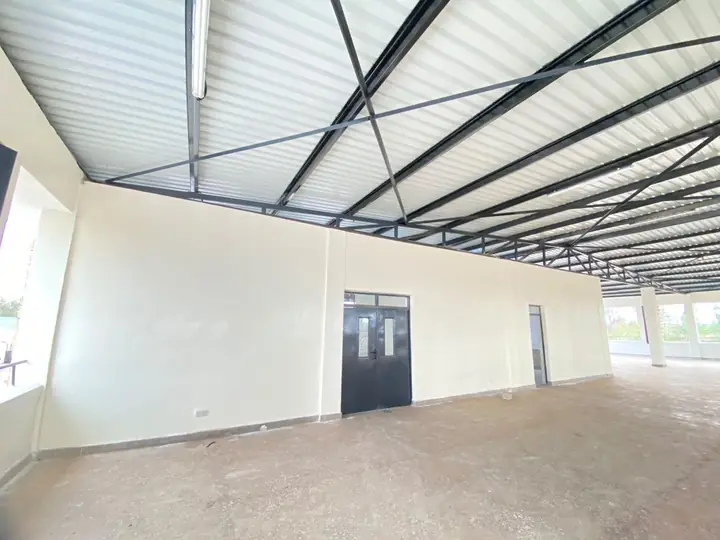
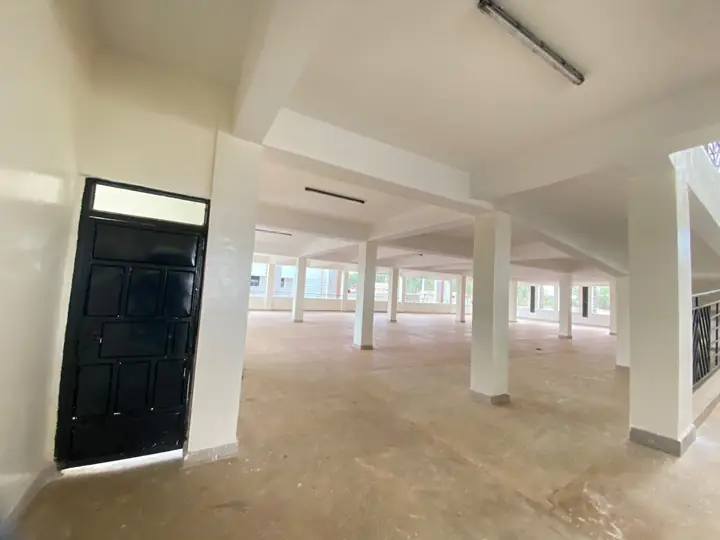
From foundation to handover

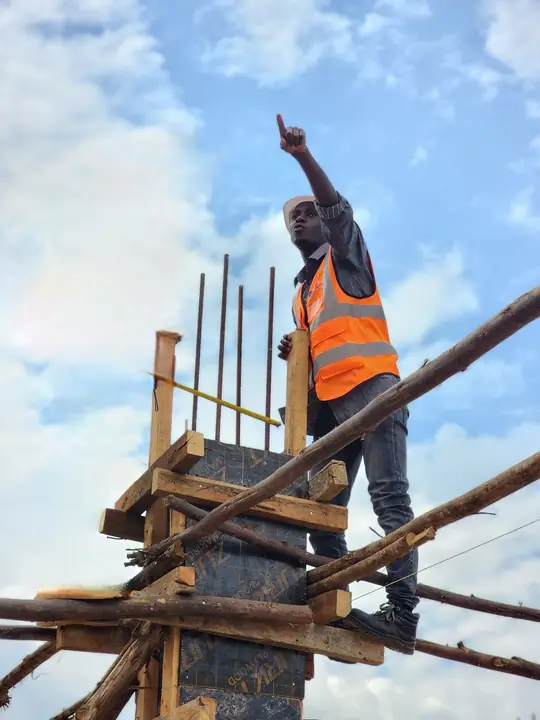
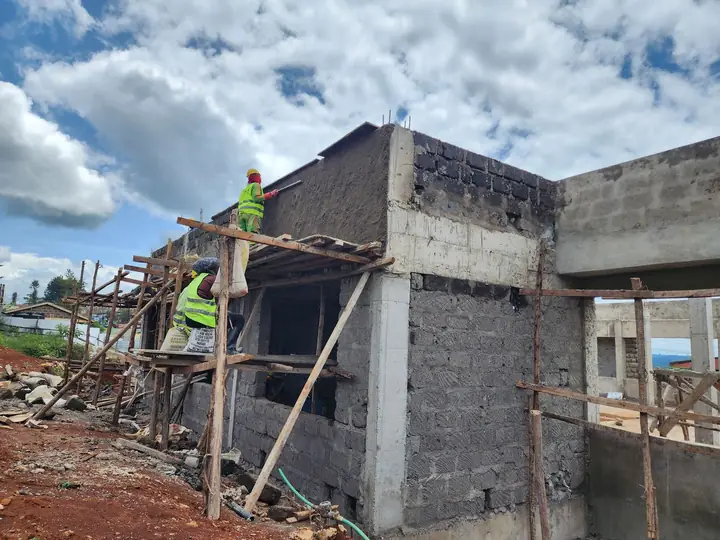
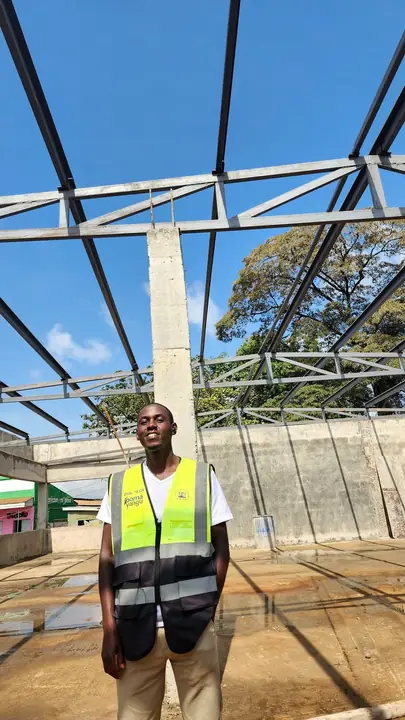
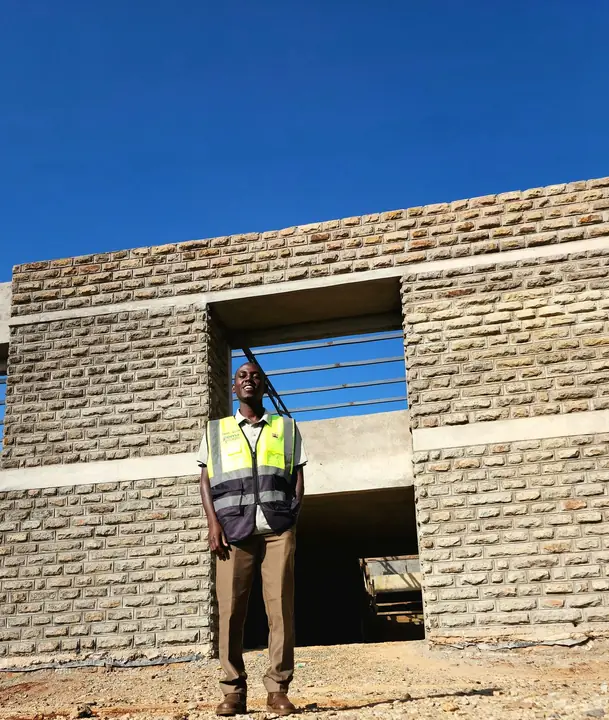
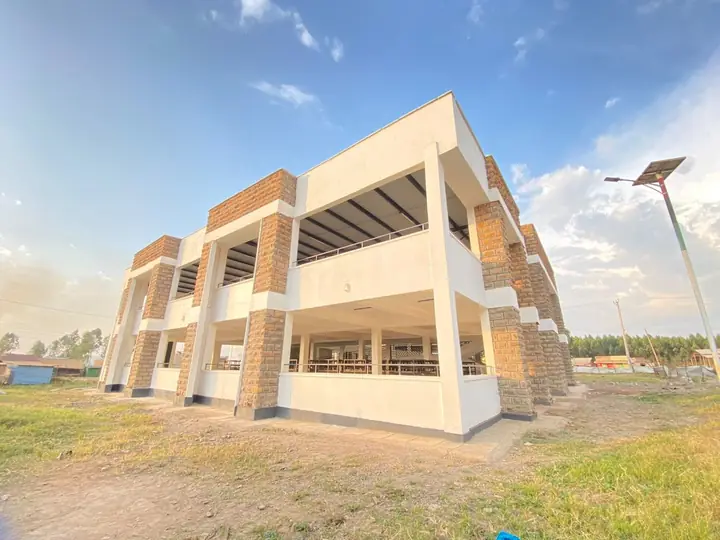
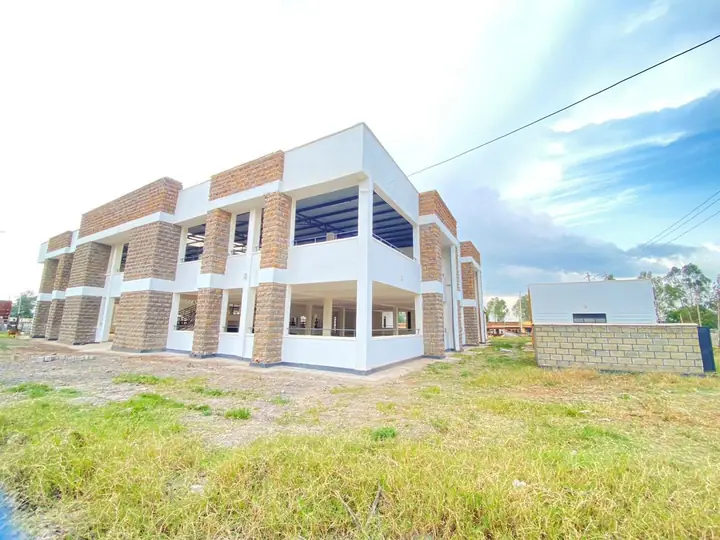
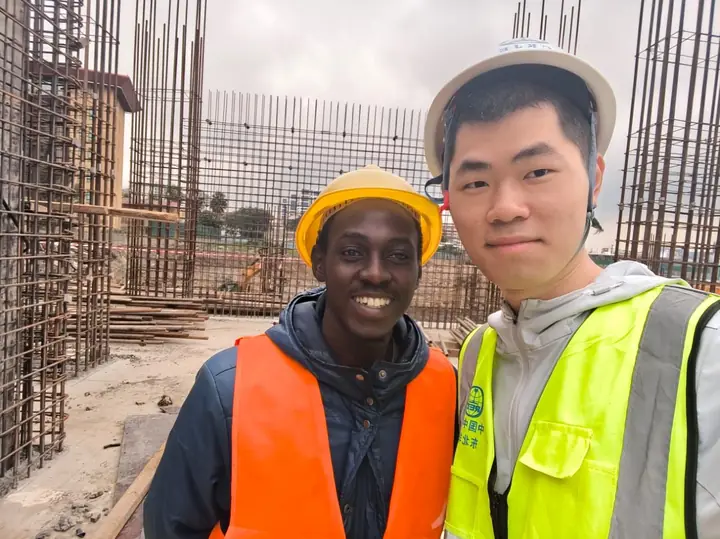
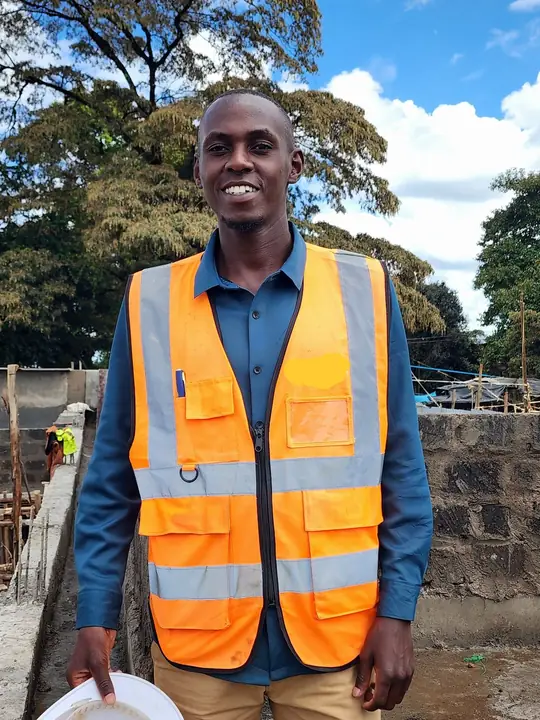
Photos from sites I've worked on. Tap any photo to enlarge it.

What I stand by

“If I’ve signed it off, I’ve checked it.”

Robinson Wachira

Contact

Get in touch

If you're building and want someone to supervise the work, check the materials and keep you updated, call or WhatsApp me. Tell me a bit about the project: where it is, what stage it's at, and what you need. If I'm not the right person for it, I'll say so. I also take on software projects.

This opens your email app with the message filled in.